Litigation - My Company Received a Writ of Summons

What's next? What Should Directors and Business Owners Do Immediately?

Receiving a Writ of Summons can be one of the most stressful experiences for a business owner or company director. Many business owners panic when they receive court papers. Some immediately assume that they have already lost the case. Others place the documents aside, hoping the matter will somehow resolve itself.

Unfortunately, both reactions can lead to costly consequences. If your Sdn Bhd company has received a Writ of Summons, it is important to understand that the lawsuit has already progressed beyond the stage of a simple complaint or Letter of Demand. Court proceedings have now commenced, and strict timelines may apply.
At Lee, William Chee & Associates, we regularly advise companies, directors, business owners, landlords, tenants, contractors, suppliers, and individuals who are facing civil claims in Malaysia. This guide explains what a Writ of Summons means, what steps should be taken immediately, and why obtaining early legal advice can significantly affect the outcome of your case.
What Is a Writ of Summons?
A Writ of Summons is a court document issued to commence certain civil lawsuits in Malaysia. It is usually accompanied by a Statement of Claim, which sets out the plaintiff's allegations and the relief sought against the defendant. In simple terms, the plaintiff is formally asking the court to make an order against you or your company. The claim may involve:
- Breach of contract;
- Outstanding debts;
- Commercial disputes;
- Property disputes;
- Landlord and tenant disputes;
- Construction disputes;
- Software development disputes;
- Professional negligence claims;
- Shareholder disputes; or
- Various other civil claims.
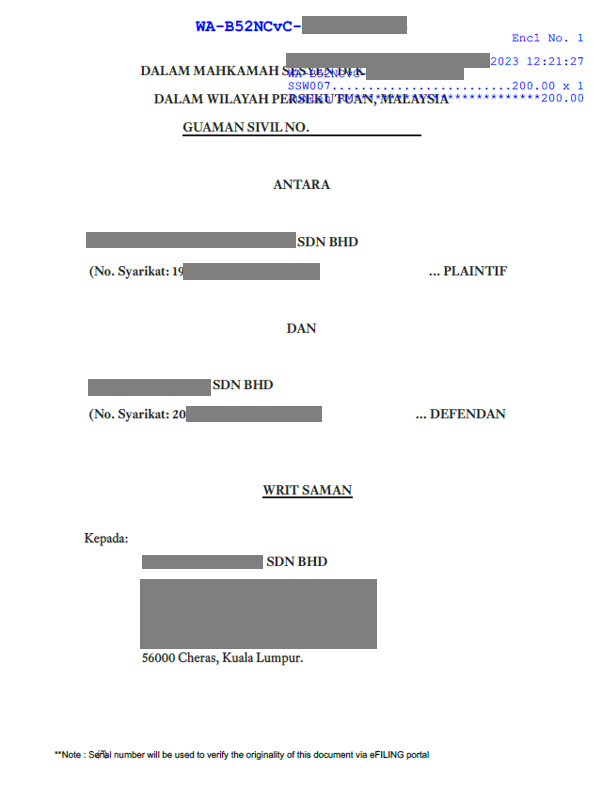
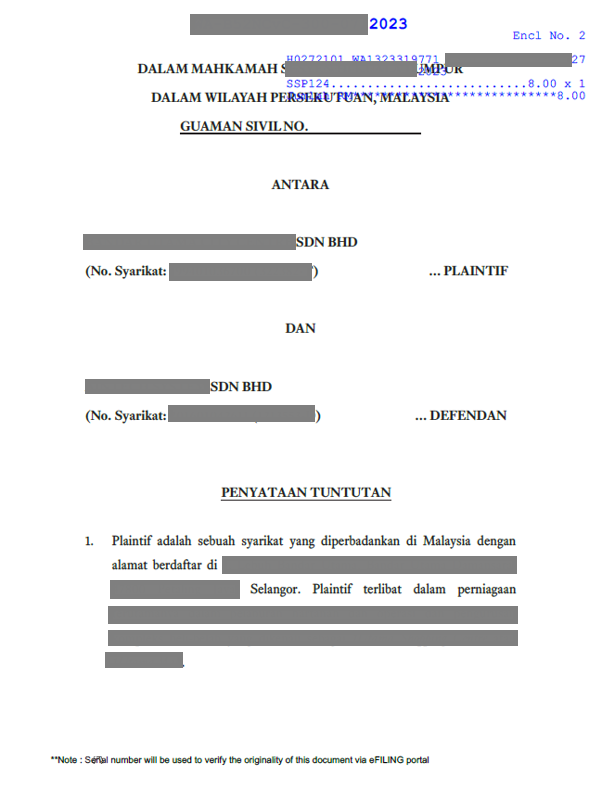
Receiving a Writ of Summons does not mean that the plaintiff automatically wins the case. However, it does mean that the matter should be taken seriously and addressed promptly.
A Writ of Summons is simply the beginning of the court process. The plaintiff still bears the burden of proving its case. The defendant is generally entitled to respond, challenge the allegations, raise legal defences, produce evidence, call witnesses, and present its version of events before the court.
What Happens If I Ignore the Writ of Summons?
Ignoring court documents is one of the most common and costly mistakes made by business owners. Some directors assume that because they disagree with the claim, they do not need to respond. Others believe that because negotiations are ongoing, the lawsuit will automatically be put on hold.
These assumptions can be dangerous. If the defendant fails to take the necessary procedural steps within the prescribed period, the plaintiff may be entitled to obtain a default judgment. A default judgment may allow the plaintiff to pursue enforcement actions against the defendant without the merits of the defence ever being heard by the court.
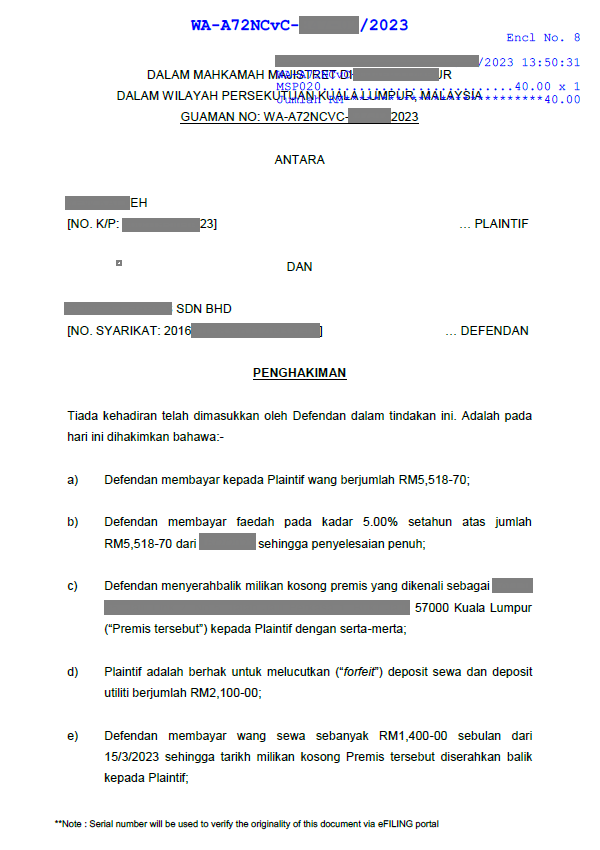
Depending on the circumstances, enforcement proceedings may include:
- Seizure and sale proceedings;
- Garnishee proceedings;
- Bankruptcy proceedings against individuals; or
- Winding-up proceedings against companies.
The earlier a defendant obtains legal advice, the lower the risk of procedural mistakes.
What Should I Do Immediately After Receiving a Writ of Summons?
1. Remain Calm
Receiving court papers is understandably stressful. However, panic often leads to poor decisions. Do not assume that you have already lost the case. Likewise, do not assume that the claim is without merit simply because you disagree with it. The first step is to understand exactly what is being claimed.
2. Read the Statement of Claim Carefully
The Statement of Claim explains:
- Why you are being sued;
- The facts relied upon by the plaintiff;
- The alleged breach or wrongdoing;
- The amount being claimed; and
- The remedies sought.
Understanding the allegations is essential before deciding how to respond.
3. Gather Relevant Documents
Evidence often determines the strength of a case. Important documents may include:
- Contracts;
- Quotations;
- Purchase orders;
- Invoices;
- Delivery orders;
- Correspondence;
- Emails;
- WhatsApp messages;
- Meeting minutes;
- Payment records; and
- Internal company documents.
Preserving these documents early can be crucial.

4. Avoid Making Emotional Responses
Some defendants immediately send angry emails, WhatsApp messages, or social media posts after receiving court papers. Such communications can sometimes be used as evidence later. Before responding to the plaintiff, it is generally advisable to obtain legal advice.
5. Consult a Litigation Lawyer Promptly
The earlier a lawyer reviews the documents, the more options may be available. A lawyer can assess:
- Whether the claim appears legally sustainable;
- Whether there are valid defences;
- Whether a counterclaim exists;
- Whether settlement discussions should be considered; and
- What procedural steps must be taken.
Common Reasons Why SMEs Are Sued
During challenging economic conditions, disputes between businesses tend to increase. Some common reasons why SMEs become defendants include:
Unpaid DebtsSuppliers, contractors, and service providers may commence legal proceedings to recover outstanding payments.
Breach of ContractAllegations may arise where one party claims that contractual obligations were not fulfilled.
Construction and Renovation DisputesClaims relating to delays, defective works, variations, or non-payment frequently arise.
Commercial Tenancy DisputesLandlords and tenants may disagree over rental arrears, termination rights, security deposits, or breaches of tenancy agreements.
Shareholder and Partnership DisputesBusiness relationships sometimes deteriorate, resulting in litigation concerning ownership rights, management control, or financial entitlements.
Software Development and Technology DisputesDisagreements may arise over project specifications, timelines, deliverables, user acceptance testing, or payment obligations.
Can My Company Defend the Claim?
Every case depends on its facts. However, the existence of a lawsuit does not mean there is no defence. Potential issues may include:
- Incorrect factual allegations;
- Incomplete disclosure by the plaintiff;
- Contractual interpretation disputes;
- Limitation issues;
- Set-off claims;
- Counterclaims;
- Misrepresentation;
- Non-performance by the plaintiff; or
- Procedural irregularities.

A proper legal assessment is necessary before any conclusions are reached.
Can Directors Be Personally Liable?
One of the most common concerns among company directors is whether they would be personally responsible for company liabilities. Generally speaking, a company is a separate legal entity from its shareholders and directors. However, there are circumstances where personal liability issues may arise depending on:
- Personal guarantees;
- Fraud allegations;
- Statutory obligations;
- Breaches of directors' duties; or
- Other specific legal circumstances.

The answer depends on the facts of each case and the legal basis of the claim.
How Long Does a Civil Suit Take in Malaysia?

There is no universal answer. The timeline depends on numerous factors, including:
- The complexity of the dispute;
- The number of parties involved;
- Whether interlocutory applications are filed;
- Availability of witnesses;
- Court scheduling; and
- Whether settlement discussions take place.
Some matters may be resolved relatively quickly, while others may take significantly longer. A litigation lawyer should be able to provide a realistic assessment based on the circumstances of your case.
Many defendants only seek legal advice after deadlines have been missed or procedural mistakes have occurred. At that stage, available options may be more limited and additional legal costs may be incurred. Obtaining advice early allows your lawyer to:
- Assess the strength of the claim;
- Identify possible defences;
- Preserve evidence;
- Avoid procedural mistakes;
- Consider settlement opportunities; and
- Develop a strategic response.
The decisions made during the first few weeks of litigation often have a significant impact on the eventual outcome of the case.
Initial Litigation Assessment for Companies and Business Owners
If your company has received a Writ of Summons, you may not need immediate answers to every legal issue. However, you should understand your position, your deadlines, and your available options. At Lee, William Chee & Associates, we offer an Initial Litigation Assessment for companies, directors, and business owners who have received court papers. During the consultation, we can:
- Review the Writ of Summons and Statement of Claim;
- Explain the court process and relevant deadlines;
- Identify potential legal issues and defences;
- Discuss settlement possibilities where appropriate;
- Advise on risk management; and
- Outline possible next steps based on your circumstances.

Whether the dispute involves unpaid debts, breach of contract, commercial tenancy issues, shareholder disputes, construction claims, property disputes, or other civil litigation matters, obtaining legal advice early can help you make informed decisions and protect your interests. If your company has received a Writ of Summons or is facing legal proceedings in Malaysia, contact us today to discuss your options and obtain practical legal guidance tailored to your situation.